
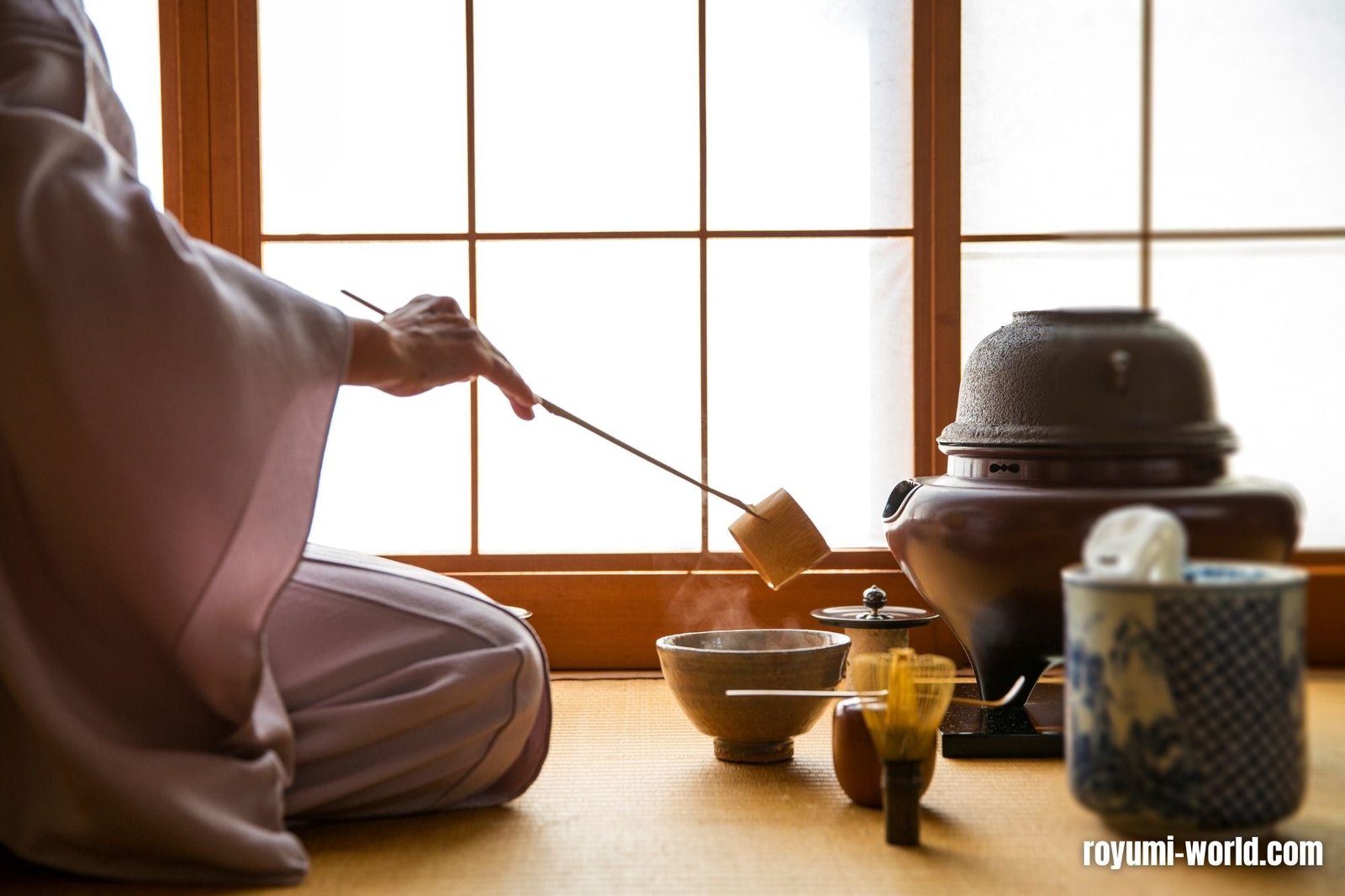
There is a moment in every tea ceremony — right after the host whisks the matcha, right before the bowl is turned — where time genuinely stops. If you’ve traveled to Japan for the food, the temples, or the cherry blossoms, the tea ceremony might be the thing that changes how you see the entire country.
The Japanese tea ceremony, known as chanoyu (茶の湯, “hot water for tea”) or sadō/chadō (茶道, “the way of tea”), is far more than a method of preparing matcha. It is a living practice built on centuries of philosophy, aesthetics, and hospitality — one that continues to shape how Japan thinks about beauty, impermanence, and connection.
This guide is written for travelers who want to go beyond a surface-level tourist experience. Whether you’re sitting in a Kyoto temple for your first bowl or returning to deepen your understanding, we’ll walk through the history, philosophy, etiquette, and practical details you need to participate respectfully and get the most from the experience.
A Brief History of Chanoyu
Tea arrived in Japan from China around the 9th century, carried by Buddhist monks who valued it as a meditation aid. But the tea ceremony as we know it today was shaped primarily by three figures across three centuries.
Murata Jukō (1423–1502) is often credited with establishing the spiritual foundation of wabi-cha — tea practice rooted in simplicity and mindfulness rather than showmanship. Before Jukō, tea gatherings among the warrior class were elaborate, competitive affairs: displays of Chinese ceramics, lavish food, and social posturing. Jukō stripped this back, insisting that tea could be a path to inner awareness.
Takeno Jōō (1502–1555) deepened the wabi aesthetic, favoring rustic Korean tea bowls over polished Chinese porcelain and introducing the concept of ichi-go ichi-e (一期一会) — “one time, one meeting” — the idea that every tea gathering is unrepeatable and should be treasured for its singularity.
Sen no Rikyū (1522–1591) codified these ideas into the practice we recognize today. Rikyū established the four principles of tea — wa (harmony), kei (respect), sei (purity), and jaku (tranquility) — and designed the intimate, minimalist tea rooms that define the ceremony’s architecture. His influence is so profound that the three major tea schools active today (Urasenke, Omotesenke, and Mushakōjisenke) all descend directly from his lineage.
The Four Principles of Tea
Understanding these four principles will transform how you experience a ceremony — they’re not just philosophical decoration, they are embedded in every gesture, every object, every moment of silence.
Wa (和) — Harmony: The relationship between host and guest, between the utensils and the season, between the garden path and the tea room. Nothing should jar or compete. A ceramic that is too perfect, a flower arrangement that is too elaborate — these would disrupt wa.
Kei (敬) — Respect: Expressed through the bow at the entrance, the careful handling of the tea bowl, the gratitude spoken before drinking. Respect extends to the objects themselves — each utensil has been chosen with care, and the guest acknowledges this by admiring them.
Sei (清) — Purity: Both literal and metaphorical. The host ritually cleanses the utensils before each preparation, and guests wash their hands at the stone basin (tsukubai) before entering the tea room. This purification symbolizes leaving the outside world behind.
Jaku (寂) — Tranquility: The state that arises when harmony, respect, and purity are present. Jaku is not something you force — it emerges. In a well-conducted ceremony, you may notice a profound stillness settling over the room, even in the middle of a busy city.
What Happens During a Tea Ceremony: Step by Step
A formal tea ceremony (called chaji) lasts approximately four hours and includes a kaiseki meal, a break in the garden, thick tea (koicha), and thin tea (usucha). Most travelers will experience a shortened version called chakai, which focuses on the thin tea portion and lasts 30–60 minutes. Here’s the general flow:
1. The Garden Path (Roji): You’ll walk along a stone path through a garden designed to transition you from the everyday world to the world of tea. The path is deliberately humble — moss, stepping stones, perhaps a stone lantern. At the end, you’ll find the tsukubai (stone water basin) where you rinse your hands and mouth.
2. Entering the Tea Room: Traditional tea rooms have a small entrance called nijiriguchi — so low you must crawl through on your knees. This was Rikyū’s design: regardless of rank, everyone must humble themselves to enter. Inside, the room is bare except for a hanging scroll (kakejiku) and a simple flower arrangement (chabana) in the alcove (tokonoma).
3. Admiring the Scroll and Flowers: Before sitting, guests move to the tokonoma and silently appreciate the scroll — often a piece of calligraphy chosen for the season or occasion — and the flowers. This is not casual glancing; it’s a genuine moment of contemplation.
4. The Preparation: The host enters with the utensils and begins the ritual cleansing. Each movement is choreographed: the folding of the silk cloth (fukusa), the scooping of matcha from the tea caddy (natsume or chaire), the ladling of hot water from the kettle. The whisk (chasen) works the matcha into a smooth, frothy bowl of vibrant green.
5. Receiving and Drinking: The host places the bowl in front of the main guest. You bow, pick up the bowl with your right hand, place it on your left palm, and rotate it clockwise two quarter-turns (about 90 degrees total). This turns the “front” of the bowl — its most beautiful face — away from you, a gesture of humility. Drink the tea in a few sips, wipe the rim, and rotate the bowl back before returning it.
6. Admiring the Utensils: After everyone has been served, guests may ask to inspect the tea caddy, scoop, and bowl more closely. Handle them with both hands, keeping them low over the tatami to prevent damage.
Essential Etiquette for Guests
You don’t need to memorize every rule — hosts are generous with visitors, and mistakes are expected and forgiven. But knowing the basics shows respect:
- Wear clean socks (white if possible). Bare feet are considered impolite in the tea room.
- Remove jewelry and watches — they can scratch the ceramics.
- Avoid strong perfume — the ceremony engages all senses, and competing fragrances disrupt the experience.
- Eat the sweet first. A traditional Japanese confection (wagashi) is served before the tea. Eat it entirely before the matcha arrives — the sweetness prepares your palate.
- Compliment the host. A simple “Otemae chodai itashimasu” (お点前頂戴いたします — “I humbly receive your tea”) before drinking, and “Okashi wa taihen oishū gozaimashita” (“The sweets were delicious”) goes a long way.
Where to Experience a Tea Ceremony in Japan
Not all experiences are created equal. Here are our recommendations, organized by depth:
Kyoto (Best for immersion): Kyoto is the spiritual home of chanoyu. The Urasenke Chado Research Center occasionally offers public demonstrations. For a more intimate experience, Zen temple ceremonies in Kyoto combine meditation with matcha in settings that haven’t changed in centuries. Camellia Garden in Gion and En Tea Ceremony near Kiyomizu-dera both offer English-language sessions in authentic tea rooms.
Tokyo (Best for accessibility): Happo-en Garden in Shirokanedai has a beautiful tea house where you can participate in a ceremony surrounded by a 300-year-old garden. The Nadeshiko experience in Shinjuku is more tourist-oriented but convenient. For something deeper, the Seirai-an tea room in Shinjuku Gyoen National Garden offers seasonal ceremonies.
Uji (Best for tea context): As Japan’s most historic tea-growing region, Uji gives you the full picture. Visit the tea fields, learn about production, and then experience a ceremony using tea grown meters from where you’re sitting. See our Uji tea fields day trip guide for the complete itinerary.
Shizuoka (Best for nature): Combine a ceremony with forest bathing in Shizuoka’s tea gardens — an experience that connects the meditative quality of tea with Japan’s forest therapy tradition.
The Three Major Tea Schools
When you book a tea ceremony experience, it will follow the traditions of one of these three schools, all descended from Sen no Rikyū:
Urasenke (裏千家): The most internationally active school and the one you’re most likely to encounter as a traveler. Urasenke whisks the tea to a thick, luxurious froth and tends to be the most welcoming to beginners and international guests.
Omotesenke (表千家): More reserved and traditional than Urasenke. The tea is whisked lightly, producing little foam. The aesthetic tends toward greater austerity.
Mushakōjisenke (武者小路千家): The smallest of the three schools, known for a stripped-down, efficient approach to the practice. Less commonly encountered by travelers but valued for its purity of form.
What to Wear
If you’re attending a casual tourist ceremony, clean, modest clothing is fine — avoid shorts, tank tops, or anything too casual. Long pants or a below-the-knee skirt work well. Some venues will lend you a pair of white tabi socks.
For a formal ceremony, traditional kimono is ideal but rarely expected of foreign guests. If you do wear one, a host will be deeply appreciative. Subdued colors are preferred — save the bright patterns for festivals.
Building a Home Tea Ceremony Practice
Many travelers return from Japan wanting to continue their tea practice. You don’t need an elaborate setup — a chawan (tea bowl), chasen (bamboo whisk), chashaku (tea scoop), and quality ceremonial-grade matcha are enough to begin. Our guide to creating a home tea ceremony space covers everything from budget setups to dedicated tea rooms.
Frequently Asked Questions
How long does a Japanese tea ceremony last?
A full formal ceremony (chaji) lasts 3–4 hours including a meal. Most tourist-accessible experiences (chakai) last 30–60 minutes and focus on the thin tea portion.
Do I need to sit in seiza (kneeling position)?
Traditionally yes, but many venues now offer chairs or allow guests to sit cross-legged. Don’t suffer in silence — if your legs go numb, it’s acceptable to shift quietly.
Can I take photos?
Ask before the ceremony begins. Many hosts allow photos before and after, but not during the preparation and drinking, as it disrupts the meditative atmosphere.
Is the tea ceremony religious?
No. While deeply influenced by Zen Buddhism, the tea ceremony is a secular cultural practice. People of all backgrounds participate.
How much does a tea ceremony experience cost?
Tourist-oriented experiences range from ¥2,000–¥5,000 ($15–$35 USD). More formal, private ceremonies or those in historic venues can cost ¥10,000–¥30,000+ ($70–$200+).