
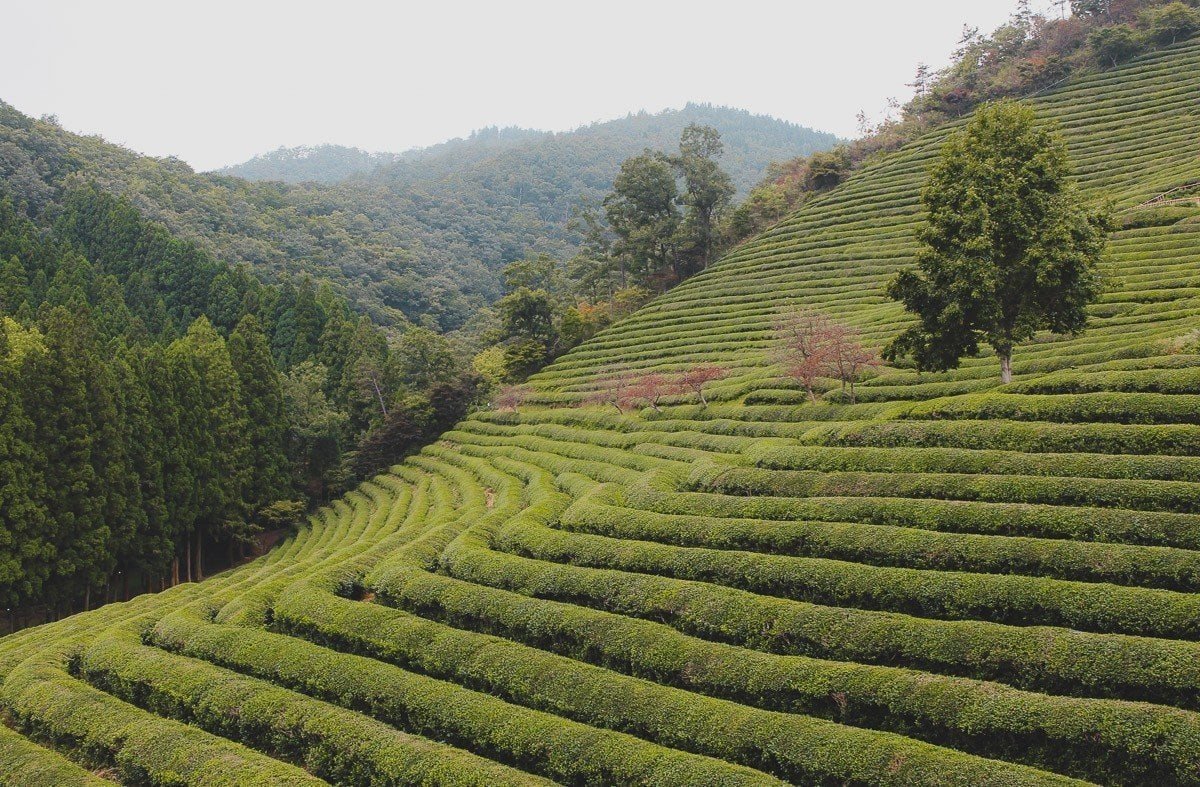
The first time you see the tea fields of Boseong — rows of brilliant green cascading down hillsides like a living quilt — you’ll understand why this small county in South Jeolla Province has become one of the most photographed landscapes in all of Korea.
Boseong produces roughly 40% of South Korea’s tea. It has been doing so since the 1930s, when the Japanese colonial government identified the region’s misty climate, acidic soil, and gentle terrain as ideal for cultivating green tea at scale. After liberation, Korean families took over the plantations, and what began as colonial agriculture became a point of deep regional pride.
This guide covers everything you need to plan a visit: how to get there, what to see, when to go, where to eat and stay, and how to connect your Boseong trip to a wider exploration of Korean tea culture.
Why Boseong Matters for Korean Tea
Korea’s tea history stretches back over a thousand years, to the Silla Dynasty monks who carried tea seeds from Tang China. But Korean tea culture nearly vanished during the Joseon Dynasty, when Confucian orthodoxy displaced Buddhist practice — and with it, the monastery tea traditions that had sustained the art for centuries.
Boseong represents the modern revival. When the Daehan Dawon plantation was established in 1957, it wasn’t just a farm — it was a statement that Korean tea culture was worth preserving and rebuilding. Today, that plantation (now branded as the Boseong Green Tea Plantation or 대한다원) is the region’s anchor attraction, drawing over two million visitors annually.
For deeper context on Korean tea’s cultural roots, our complete guide to Korean tea ceremony (Darye) traces the tradition from Silla monks to modern practice.
Getting to Boseong
From Seoul: The most common route is KTX high-speed rail from Seoul Station or Yongsan to Gwangju Songjeong Station (approximately 2 hours, ₩50,000–60,000). From Gwangju, take an intercity bus from the U-Square terminal to Boseong (about 1.5 hours, ₩8,000). Total journey time: roughly 4 hours door-to-door.
From Busan: Take the KTX or SRT to Gwangju, then bus to Boseong. Alternatively, intercity buses run directly from Busan to Boseong via Suncheon, taking about 3.5 hours.
By car: If you’ve rented a car (highly recommended for South Jeolla exploration), Boseong is about 3.5 hours from Seoul via the Honam Expressway, or 3 hours from Busan. The drive through South Jeolla Province is gorgeous — rice paddies, coastal villages, and the rolling foothills of Jirisan.
From Suncheon: If you’re visiting Suncheon Bay Wetland Reserve (and you should), Boseong is just 40 minutes west by bus or car — they pair perfectly in a 2–3 day itinerary.
Daehan Dawon: The Main Plantation
The Boseong Green Tea Plantation (대한다원보성녹차밭) is the iconic destination. Here’s what to expect:
The terraced fields: Seven distinct hillside sections, each with neatly groomed tea rows. The most photographed area is the hillside where rows converge toward a viewpoint overlooking Deungnyangman Bay. Arrive early morning for misty, atmospheric photos — or late afternoon for golden-hour drama.
Walking trails: A well-maintained network of paths winds through the fields, through a cypress forest, and along a cedar-lined avenue that’s stunning in any season. The full loop takes about 60–90 minutes at a relaxed pace.
Tea museum and tasting: A small museum near the entrance covers the history of Korean tea cultivation. The adjacent tasting room serves matcha (Korean-style), roasted green tea, and specialty blends. Don’t skip the green tea ice cream — it’s made with tea from the fields you just walked through.
Entry fee: ₩4,000 for adults (about $3 USD). One of the best value attractions in Korea.
Hours: Generally 9:00 AM – 6:00 PM (until 5:00 PM in winter). Confirm before visiting as hours shift seasonally.
Beyond Daehan Dawon: Other Tea Experiences
Botjae Tea Plantation: Smaller and less crowded than Daehan Dawon, with a more intimate feel. The owner often leads personal tastings and will explain the nuances of Korean green tea processing — a rare opportunity to learn from a working tea farmer.
Boseong Tea Museum (보성차박물관): A dedicated museum covering the full sweep of Korean tea history, from ancient Silla-era origins through Japanese colonization to the modern revival. Well-organized with English signage.
Tea-picking experiences: During the spring harvest (late April through May), several farms offer hands-on tea-picking sessions. You’ll learn to select the tender two-leaves-and-a-bud tip, and some programs let you follow the leaves through the roasting and rolling process. Check with the Boseong Tourist Information Center for current offerings.
Yulpo Beach and hot springs: Just 15 minutes from the main plantation, Yulpo offers a green tea hot spring (녹차탕) where mineral water is infused with Boseong green tea. It sounds gimmicky; it is absolutely wonderful. The beach itself is quiet and uncrowded compared to Korea’s east coast.
When to Visit
Spring (April–May): The prime season. Tea fields are at their most vivid green, the first flush harvest is underway, and the Boseong Green Tea Festival (usually early May) features picking events, tea ceremonies, and cultural performances. Book accommodation early — the festival draws large crowds.
Summer (June–August): Lush and full, but hot and humid. The fields are beautiful, and you’ll have them more to yourself. Morning visits are essential to beat the afternoon heat.
Autumn (September–November): Gorgeous light and cooler temperatures make this ideal for photography. The surrounding forests add fall color to the green tea backdrop. Our personal favorite season for visiting.
Winter (December–February): The Boseong Light Festival transforms the plantation into a massive LED installation from late November through mid-January. It’s kitsch in the best possible way — millions of lights draped over the tea fields, with themed zones and food stalls. Completely different from the daytime experience, and wildly popular with Korean families.
Where to Stay
Boseong town: Several clean, affordable motels and pensions within walking distance of the bus terminal. Nothing luxurious, but functional and friendly.
Yulpo area: More resort-style accommodation near the beach and hot springs. The Yulpo Sol Beach Hotel offers ocean views and easy access to the green tea baths.
Hanok stays: A few traditional Korean hanok guesthouses operate in the area, offering heated ondol floors and home-cooked Korean breakfasts. These are the most charming option and typically cost ₩60,000–₩100,000 per night.
Glamping: Several tea-farm-adjacent glamping sites have opened in recent years, offering bell tents and tiny cabins surrounded by tea fields. Search “보성 글램핑” on Korean booking sites.
Food: What to Eat in Boseong
Boseong is serious food territory. South Jeolla Province is Korea’s culinary heartland, and the local specialties reflect both the sea and the tea:
- Nokcha samgyeopsal (녹차삼겹살): Pork belly marinated in green tea and grilled at your table. The tea cuts the richness of the pork and adds a subtle, grassy sweetness. This is the signature Boseong dish — multiple restaurants near the plantation serve it.
- Green tea noodles (녹차국수): Cold or warm noodles made with green tea flour. Refreshing, light, and perfect for a hot day.
- Beopseongpo raw fish (회): The nearby port of Beopseongpo serves some of the freshest sashimi on the south coast. A full raw fish platter (hoe) with all the banchan will run ₩30,000–₩50,000 for two.
- Green tea everything: Ice cream, latte, tiramisu, rice cakes, bread, chocolate — the tourist areas have fully embraced green tea as a flavor. The quality is surprisingly high.
Connecting Boseong to a Wider Korean Tea Trip
Boseong is the anchor, but it pairs beautifully with other Korean tea destinations:
- Korean darye tea ceremonies — participate in a traditional tea ceremony in nearby temples or cultural centers
- Seoul’s traditional tea houses — bookend your trip with the capital’s best tea rooms in Insadong and Bukchon
- Darye for beginners — understand the ceremony before you experience it live
- Hadong tea region — across the border in South Gyeongsang Province, Hadong claims to be the birthplace of Korean tea. A day trip from Boseong through the Jirisan foothills makes for a spectacular drive.
Practical Tips
- Bring comfortable walking shoes. The plantation paths are paved but involve significant elevation changes.
- Sunscreen and a hat in summer — the fields offer little shade.
- Korean language basics help. English is limited outside the main plantation. Google Translate’s camera function is invaluable for menus and signs.
- Cash is still useful in smaller restaurants and shops, though card acceptance has improved dramatically.
- T-money card works on intercity buses within South Jeolla Province.
Frequently Asked Questions
Is Boseong worth a special trip from Seoul?
Absolutely — especially if combined with Suncheon Bay and the South Jeolla coast. The region is one of Korea’s most underrated travel areas, with world-class food, stunning landscapes, and very few international tourists.
Can I buy tea directly from the plantation?
Yes. Both Daehan Dawon and smaller farms sell their own production. Prices are fair and the quality is guaranteed fresh. First-flush spring green tea (우전, ujeon) is the premium grade.
How long should I spend in Boseong?
A full day is sufficient for the main plantation and Yulpo. Two days allows you to explore smaller farms, the tea museum, and the coast at a relaxed pace.
Is it good for families with children?
Very much so. The plantation has gentle walking paths, the Light Festival is a hit with kids, and the green tea ice cream is universally beloved.
What’s the best tea to buy in Boseong?
First-flush green tea (ujeon/sejak) for the highest quality, or roasted green tea (hyeonmi nokcha) for a more everyday drinking experience. Both make excellent gifts.